
The "Alexandrite Effect": How to Measure True Investment Quality and Avoid the Muddy Zone
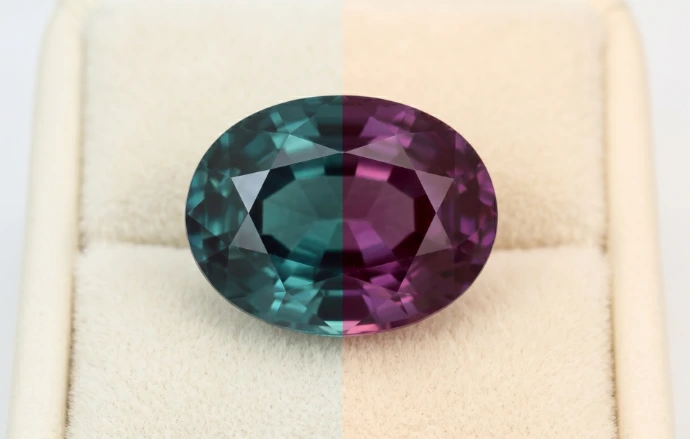
When an experienced collector talks about the ultimate "phenomenal gemstone," they are almost always referring to the mesmerizing optical trick known as the Alexandrite Effect. To the untrained eye, it looks like magic; to a gemologist, it is a magnificent display of selective light absorption.
A true, high-caliber Alexandrite functions like two entirely different stones depending on your environment. When viewed under crisp, blue-sky daylight (or daylight-balanced LED lighting), it absorbs light in a way that reflects a rich, cool bluish-green. Step inside a room lit by a warm candle or an incandescent bulb, and the stone instantly flips its internal switch, reflecting a deep, warm purplish-red.
But not all color-changing stones are created equal. If you want to acquire investment grade alexandrite criteria, you must look closely at two non-negotiable factors: the color change percentage and the clarity of the primary colors.
Deciphering the Alexandrite Color Change Percentage
When analyzing a laboratory grading report (such as from the GIA or GRS), you will often see a metric called the alexandrite color change percentage. This grades the completeness of the optical shift on a scale from 0% to 100%.
Commercial Grade (30% - 50% Shift): The stone shows a weak, lazy change. You might see a hint of dull green that transitions into a faint, washed-out brownish-pink only under extreme lighting changes.
Fine Trade Grade (60% - 80% Shift): A distinct, obvious change that any casual observer can notice immediately. The colors are clear, though some secondary undertones might linger.
Investment Grade (85% - 100% Shift): This is the holy grail. The transformation is absolute, uniform, and immediate across the entire face of the gem.
Important Legal Distinction: If a stone displays a color shift of less than 30%, it cannot legally be labeled or valued as a true Alexandrite on international markets. Instead, it is classified as a Color-Change Chrysoberyl—a beautiful stone, but one that commands only a fraction of Alexandrite’s premium price per carat.
Beware the "Muddy Zone"
When learning how to judge alexandrite quality, the single biggest mistake novice buyers make is focusing entirely on how much a stone changes color, rather than what colors it changes into. This is where you must watch out for the dreaded "Muddy Zone."
The world's most valuable Alexandrites possess crisp, saturated primary colors: a pure teal or emerald green that snaps directly into a vibrant raspberry or ruby red.
Low-quality stones, however, get trapped in muddy, unattractive secondary modifiers. Instead of a clean snap, their daylight color looks like a dull, swampy olive-brown, and their incandescent color looks like a bruised, grayish-plum. These stones lack the crystalline purity required to split light cleanly. They appear dark, lifeless, and "muddy" in average ambient room lighting—a massive red flag that permanently caps the gem's future resale value.
When hunting for an investment masterpiece, always insist on viewing the stone against a neutral white background under both light sources. You are looking for a sharp, definitive color contrast. A stone that boasts a 100% color shift is only a true asset if the two colors on either side of that shift are beautiful, vivid, and completely clear of the muddy zone.
